
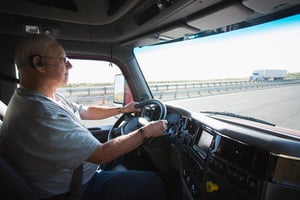
Every truck driver has a pattern to the way he or she drives. These patterns, or habits, can be good or bad, or more precisely, safe or unsafe.
A driver who integrates safety into all of his or her driving decisions, regardless of the environment, has established a pattern of behavior that reduces the risk of a crash.
On the flipside, pattern driving refers to practicing unsafe behaviors, such as speeding and tailgating. Pattern driving also can occur when a driver gets too comfortable with his or her route or routines and lets his or her guard down.
This type of pattern driving is common when drivers run dedicated routes to the same customers day after day and become complacent. In this case, complacency becomes a distraction, and the driver loses focus of his or her surroundings and the potential hazards that could lead to a crash.
Read the list of driving patterns below and ask yourself if there are actions you can take to improve your driving skills.
Unsafe Driving Behaviors

Do Any of the Following Driving Patterns Apply to You?
| Talking on the phone or texting while driving | Blocking the path of oncoming traffic |
| Tailgating | Gawking at passing crash scenes |
| Speeding | Daydreaming while driving |
| Making frequent lane changes | Making U-turns |
| Driving while ill or fatigued | Driving too fast for conditions |
| Driving under the influence of drugs or alcohol |
Not wearing a seatbelt |
Safe Driving Behaviors

Avoid Complacency
Each day, change your pre-trip inspection routine. If permitted, try new routes to dedicated customers.

Avoid Distractions
Do not drive if taking any medication that can cause drowsiness. To reduce fatigue, get plenty of rest, stay hydrated, and avoid heavy meals. Wear sunglasses and use the visor to reduce sun glare.

Observe Proper Speed for Conditions
Reduce speed by at least 2-3 mph below the flow of traffic, not to exceed the posted speed limit. Before entering ramps, curves, and turns, reduce speed by at least 10-15 mph below the posted speed limit, or more based on conditions.
 React Properly to Hazards

Maintain Proper Following Distance
Keep a minimum of six seconds distance behind the vehicle in front, and add one second for each additional hazard, such as snow, freezing rain, sun glare, or black ice, as the hazard presents.
 Maintain One Lane
Avoid making erratic or unnecessary lane changes. Stay in one lane as much as possible.
Note: These lists are not intended to be all-inclusive.
The information in this article is provided as a courtesy of Great West Casualty Company and is part of the Value-Driven® Company program. Value-Driven Company was created to help educate and inform insureds so they can make better decisions, build a culture that values safety, and manage risk more effectively. To see what additional resources Great West Casualty Company can provide for its insureds, please contact your safety representative, or click below to find an agent.

Insurance Contracts are Underwritten, Administered, and Issued by: Great West Casualty Company, Old Republic Life Insurance Company, and Old Republic Union Insurance Company.
One or more Old Republic companies may provide the products and/or services described. Information presented is for illustrative purposes only and does not constitute a contract or advice, including employment advice or advice to motor carriers. Please refer to the relevant insurance policy for actual terms. Products and services may not be available in all states and may be subject to change without notice. © 2026 Old Republic International Corporation. Old Republic® and the Old Republic Circle of Stars monogram are registered trademarks. All Rights Reserved.
