
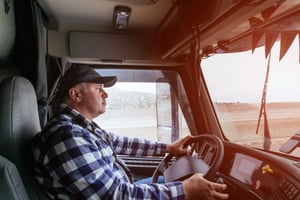
Truck drivers were asked to identify the driving skills they felt were most effective in preventing crashes. They agreed on the Essential 7 Driving Techniques. Read the information below and ask yourself how you can improve your driving style using these techniques.
Avoid Distractions
 Distracted driving involves any activity (including illness and fatigue) that diverts your attention away from driving.
BEST PRACTICES: While driving, do not use mobile devices, eat or drink, daydream, etc. Make quick glances to mirrors. Get plenty of rest. If driving, avoid medications that can cause drowsiness.
Observe Proper Speed for Conditions
 Adjust your speed based on the environment, such as traffic volume, snow, rain, road construction, etc.
BEST PRACTICES: Reduce speed by at least 2-3 mph below the flow of traffic, not to exceed the posted speed limit. If conditions are unsafe to drive in, pull over until it is safe to continue.
Maintain Proper Following Distance
 Trucks need more distance to stop than passenger vehicles need. Creating more space between the truck and vehicles ahead gives you more time to perceive and react to hazards.
BEST PRACTICES: Keep a minimum of six seconds behind the vehicle ahead and add one second more for each additional hazard present.
Be Attentive to the Road Ahead
 Traffic ahead can slow or stop abruptly; or a hazard may present itself unexpectedly, like a deer running across the road, requiring you to react suddenly.
BEST PRACTICES: Be prepared to stop suddenly. Watch for traffic slowing or stopping ahead, then get off the accelerator immediately and apply controlled braking.
React Properly to Hazards
 Each hazard you encounter is unique, and the proper reaction can range from adjusting your speed and increasing following distance to pulling over until it is safe to continue driving.
BEST PRACTICES: A proper reaction to a hazard shouldn’t put other drivers at risk. Be alert. Recognize the hazard. Know the defense.
Yield the Right of Way
 Forcing your vehicle into another driver’s lane, blocking oncoming traffic, or preventing merging traffic from entering are examples of failing to yield the right of way.
BEST PRACTICES: Remember to drive defensively. Even if you have the right of way, yielding to other drivers may be necessary to prevent a crash.
Maintain One Lane
 Avoid frequent lane changes and stay in one lane as much as possible.
BEST PRACTICES: Before changing lanes, make sure it is safe and legal to do so. Use the mirrors and “Lean and Look” method to ensure the adjacent lane is clear, activate the turn signal, and then move over gradually.
Note: These lists are not intended to be all-inclusive.
The information in this article is provided as a courtesy of Great West Casualty Company and is part of the Value-Driven® Company program. Value-Driven Company was created to help educate and inform insureds so they can make better decisions, build a culture that values safety, and manage risk more effectively. To see what additional resources Great West Casualty Company can provide for its insureds, please contact your safety representative, or click below to find an agent.

Insurance Contracts are Underwritten, Administered, and Issued by: Great West Casualty Company, Old Republic Life Insurance Company, and Old Republic Union Insurance Company.
One or more Old Republic companies may provide the products and/or services described. Information presented is for illustrative purposes only and does not constitute a contract or advice, including employment advice or advice to motor carriers. Please refer to the relevant insurance policy for actual terms. Products and services may not be available in all states and may be subject to change without notice. © 2026 Old Republic International Corporation. Old Republic® and the Old Republic Circle of Stars monogram are registered trademarks. All Rights Reserved.
