
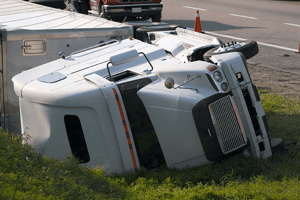
The Federal Motor Carrier Safety Administration (FMCSA) recently expanded its Crash Preventability Determination Program (CPDP), offering a strategic opportunity for motor carriers to enhance their safety profiles and operational reputations. As of December 2024, the FMCSA now recognizes 21 eligible crash types, including four new categories, for review under CPDP. This expansion allows more motor carriers to demonstrate that certain crashes involving their commercial motor vehicles (CMVs) were not preventable by their drivers.
Understanding and utilizing the CPDP is both a compliance task and an essential risk management strategy. Accurate crash data is pivotal in shaping your company's Safety Measurement System (SMS) scores, which in turn can affect your standing with insurance providers, impact bidding opportunities, and influence customer confidence. Each of these three factors can have a negative financial impact if SMS scores are too high. Here are some actions to consider:
Stay Informed and Educate Key Staff
Make sure operations staff are up to date on the CPDP changes. The expanded list applies to crashes occurring on or after December 1, 2024, and includes categories such as indirect strikes and video-supported incidents. Leadership should ensure that relevant personnel understand the new criteria and procedures.
Audit Your Crash Records
Conduct regular reviews of crash histories, especially those involving ambiguity or external fault. For crashes within the five-year review window, determine whether they meet CPDP criteria for a Request for Data Review (RDR).
Use the DATAQS System Strategically
For eligible crashes, submit an RDR through the FMCSA’s DataQs portal. Include required documents such as police reports, photographs, videos, and witness statements. Ensure the quality and completeness of your submission, as this could impact the FMCSA’s determination.
Utilize the New Video Evidence Provision
Video footage can be used as primary evidence in CPDP reviews, especially for crash types not clearly defined in the 21 categories. Investing in high-quality, inward- and outward-facing dashcams can help prove your case.
Track and Measure the Impact
As part of your ongoing safety performance metrics, incorporate CPDP results into your criteria. Understanding how many crashes are removed from SMS calculations—and how that affects your company’s overall safety score—gives your leadership team and operations staff a measurable return on effort.
Note: These lists are not intended to be all-inclusive.
The information in this article is provided as a courtesy of Great West Casualty Company. To see what additional resources Great West Casualty Company can provide for its insureds, please contact your risk control representative, or click below to request a quote.

Insurance Contracts are Underwritten, Administered, and Issued by: Great West Casualty Company, Old Republic Life Insurance Company, and Old Republic Union Insurance Company.
One or more Old Republic companies may provide the products and/or services described. Information presented is for illustrative purposes only and does not constitute a contract or advice, including employment advice or advice to motor carriers. Please refer to the relevant insurance policy for actual terms. Products and services may not be available in all states and may be subject to change without notice. © 2026 Old Republic International Corporation. Old Republic® and the Old Republic Circle of Stars monogram are registered trademarks. All Rights Reserved.
