
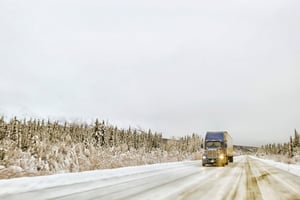
Winter driving can be dangerous. The possibility of losing control of one’s vehicle and the need to drive defensively to protect against other drivers requires alertness and readiness to react to hazards. Read the information below, and ask yourself how you can improve your driving style in any of the hazard categories.
Recognize the Hazards
 Environment
Lanes may narrow due to snow accumulation while road surfaces can become slippery from freezing rain, ice, sand, or ice melt. Sun glare, blowing snow, and fog and ice on windows also reduce visibility in winter.
 Equipment
Insufficient tread depth on tires or brakes that are out of adjustment reduces the ability to stop the truck safely. An inoperable window defroster or ice on the mirrors affects visibility.
 Personal Behaviors
Driving too fast or using cruise control in adverse road conditions increases the risk of a jackknife or losing control of the vehicle. Driving while ill or fatigued or not wearing cold weather clothing can be distracting.
Know the Defense
 Vehicle Inspections
Ensure window defrosters and the heater work properly. Check tires for proper tread depth. Clean snow and ice off the tractor and trailer during stops, especially on the lights, turn signals, and reflectors.
 Avoid Distractions
Do not drive if taking any medication that can cause drowsiness. Get plenty of rest, stay hydrated, and avoid heavy meals to reduce fatigue. Wear sunglasses and use the visor to reduce sun glare.
 Observe Proper Speed for Condition
In adverse conditions, reduce speed by at least 2-3 mph below the flow of traffic, not to exceed the posted speed limit. Make accelerations gradually. Before entering ramps, curves, and turns, reduce speed by at least 10-15 mph below the posted speed limit or more based on conditions to avoid a rollover.

React Properly to Hazards
Do not use the engine brake or cruise control in slippery conditions. Be cautious of ice on bridges and pavement that looks wet but could be black ice. If driving conditions worsen, find a safe location to pull over and wait.
 Maintain Proper Following Distance
Keep a minimum of six seconds behind the vehicle in front, but add one second more for each additional hazard that is present, like snow, freezing rain, sun glare, or black ice.
Note: These lists are not intended to be all-inclusive.
The information in this article is provided as a courtesy of Great West Casualty Company and is part of the Value-Driven® Company program. Value-Driven Company was created to help educate and inform insureds so they can make better decisions, build a culture that values safety, and manage risk more effectively. To see what additional resources Great West Casualty Company can provide for its insureds, please contact your safety representative, or click below to find an agent.

Insurance Contracts are Underwritten, Administered, and Issued by: Great West Casualty Company, Old Republic Life Insurance Company, and Old Republic Union Insurance Company.
One or more Old Republic companies may provide the products and/or services described. Information presented is for illustrative purposes only and does not constitute a contract or advice, including employment advice or advice to motor carriers. Please refer to the relevant insurance policy for actual terms. Products and services may not be available in all states and may be subject to change without notice. © 2026 Old Republic International Corporation. Old Republic® and the Old Republic Circle of Stars monogram are registered trademarks. All Rights Reserved.
